Can You Refinish a Bathtub Surround? Costs, Materials, and What to Expect
May 29, 2026
The Bathtub Refinishing Process Explained: What Actually Happens Step by Step
June 2, 2026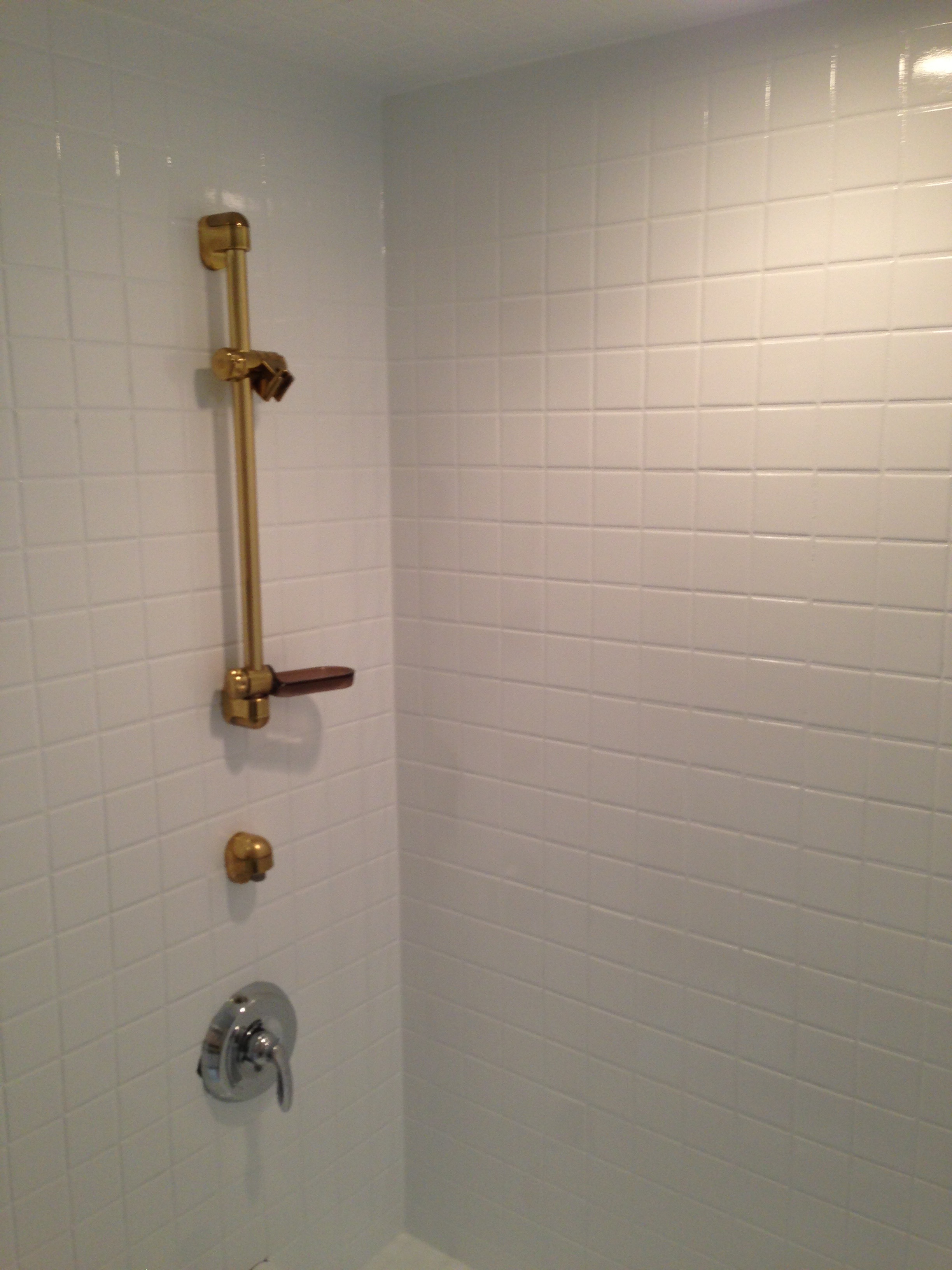
Bathtub Refinishing vs. Bathtub Liner: An Honest Side-by-Side Comparison
Your bathtub looks rough and you want to fix it without ripping out the whole thing. Two options keep coming up: refinishing (also called reglazing or resurfacing) and bathtub liners (a molded acrylic shell placed over your existing tub). Both promise a fresh-looking tub at a fraction of replacement cost, but they work very differently, cost very differently, and age very differently. This guide breaks down the real differences so you can make the right call for your bathroom and your budget.
Quick Decision Matrix: Which Option Fits Your Situation?
| Factor | Bathtub Refinishing | Bathtub Liner |
|---|---|---|
| Cost | $350–$600 (tub only); $500–$1,000 with tile surround | $1,200–$4,000+ depending on tub shape and wall panels |
| Lifespan | 10–15 years with proper care | 3–5 years average before issues emerge |
| Time to Complete | 4–6 hours, usable in 24–48 hours | 1–4 weeks (custom fabrication + shipping + install day) |
| Appearance | Smooth, high-gloss, seamless finish matching original contours | New-looking shell, but seams at edges can be visible |
| Mold Risk | Low — coating bonds directly to tub surface | Higher — water can penetrate between liner and tub |
| Best For | Structurally sound tubs that look worn, stained, or dated | Tubs with minor surface damage where the homeowner wants a different color or style |
| Main Tradeoff | 24–48 hour cure time; mild odor during application | Higher cost; potential for hidden moisture damage over time |
How Does Each Process Actually Work?
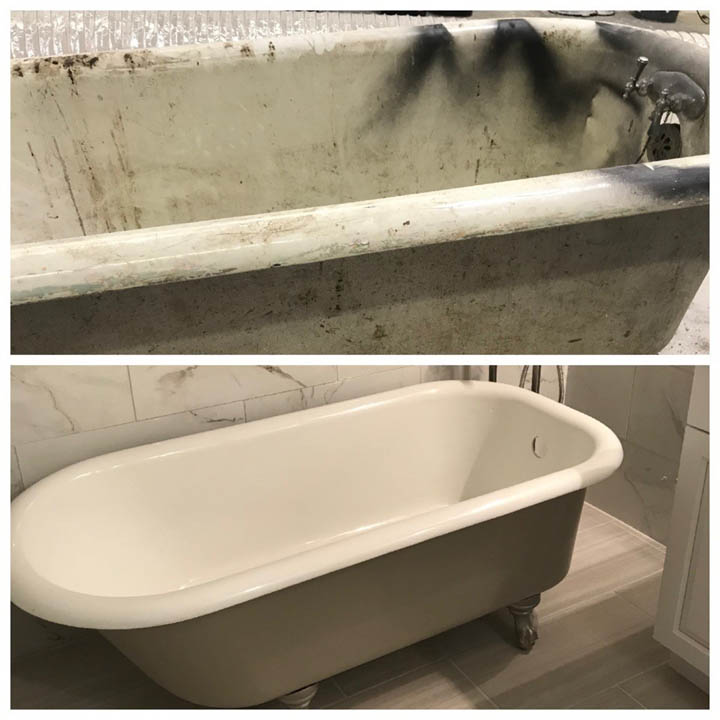
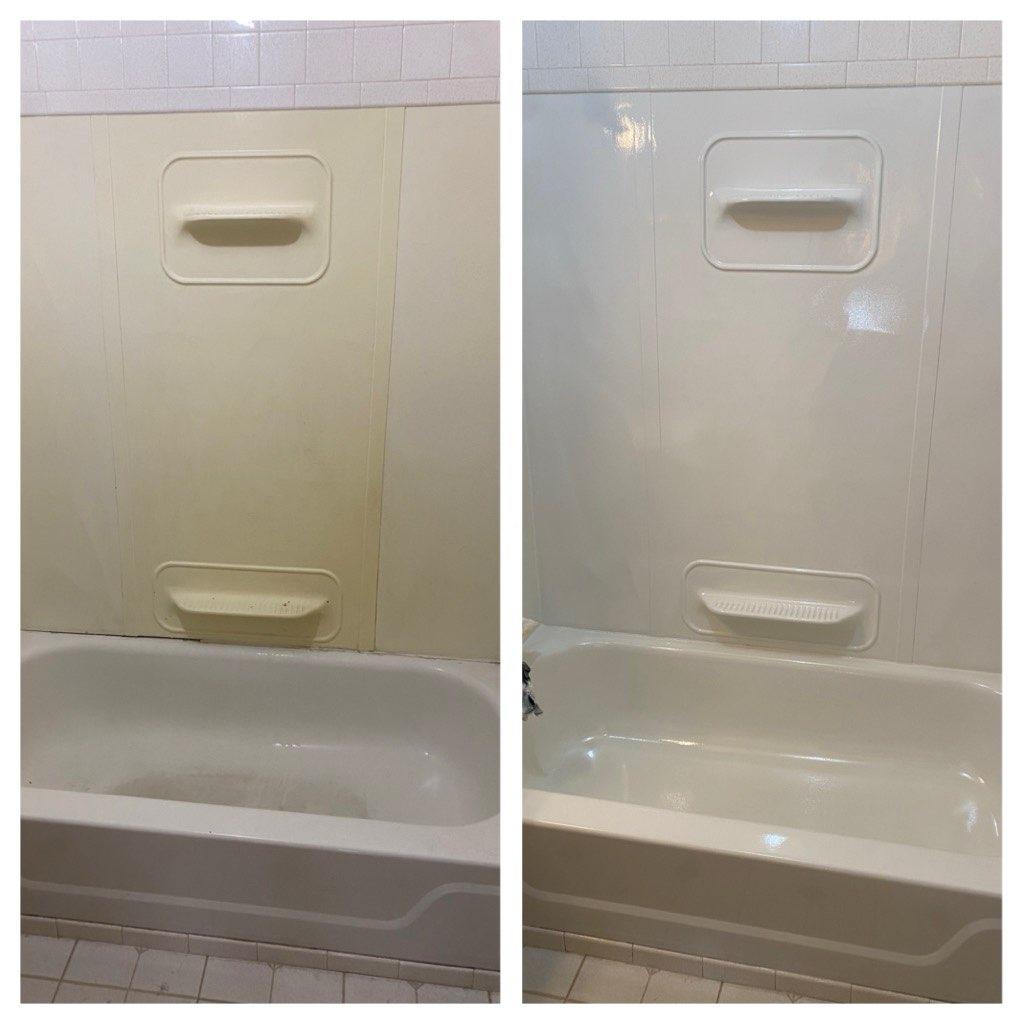
Refinishing applies a new coating directly to your existing tub. A professional technician cleans, repairs chips or cracks, etches the surface for adhesion, and sprays multiple layers of a specialized primer and topcoat. The result is a factory-smooth, high-gloss finish bonded permanently to the original porcelain, cast iron, or fiberglass substrate. The entire process takes about 4 to 6 hours, and the tub is ready for use within 24 to 48 hours after the coating cures.
A bathtub liner is a custom-molded acrylic or PVC shell manufactured to fit over your existing tub. An installer takes precise measurements of your tub, sends those to a fabrication facility, and weeks later the molded piece arrives for installation. The installer applies adhesive to the original tub surface, sets the liner in place, and seals the edges with caulk. While the installation itself takes a few hours, the total timeline from measurement to finished product is typically 2 to 4 weeks.
What Does Each Option Really Cost in the Chicago Area?
In the greater Chicago market, professional bathtub refinishing runs between $340 and $600 for a standard tub. Adding a tile surround typically brings the total to $500 to $1,000. These prices cover all materials, labor, ventilation setup, and cleanup. Most reputable refinishers include a multi-year warranty in that price.
Bathtub liners in the Chicago area start around $1,200 for a basic tub-only installation. Once you add wall panels (which most companies push heavily because a liner without matching walls looks odd), the total climbs to $2,500 to $4,000. Some national franchises quote even higher. The major liner companies — Bath Fitter, Re-Bath, and similar brands — use proprietary measuring and manufacturing processes that keep prices elevated because you cannot comparison-shop the same product from multiple installers.
Here is the break-even math: refinishing at $500 lasts 10 to 15 years. A liner at $2,500 lasts 3 to 5 years. Over a 15-year period, you would potentially need three liner installations ($7,500 total) versus one or at most two refinishing jobs ($500 to $1,000 total). That is a 5x to 7x cost difference over the life of your bathroom.
Which Option Lasts Longer and Why?
A professionally refinished bathtub typically lasts 10 to 15 years. The coating bonds chemically to the existing tub surface, creating a permanent barrier that wears similarly to the original factory finish. Companies like Aarco Baths, which has been refinishing tubs in the Chicago area since 1963, back their work with a full 10-year guarantee — a warranty length you rarely see with liner installations.
Bathtub liners have a shorter effective lifespan, averaging 3 to 5 years before homeowners report issues. The failure mode is almost always moisture-related: water seeps between the liner and the original tub through compromised caulk seams, broken edge seals, or micro-cracks at corners where the acrylic sheet was formed. Once water gets trapped underneath, you cannot see it, cannot clean it, and cannot stop the resulting mold and mildew growth without removing the entire liner.
The reason refinishing outlasts liners is structural: a coating becomes part of the tub, while a liner sits on top of it. Anything sitting on top of a wet surface in a humid environment will eventually develop seal failures. This is not a defect — it is the physics of the design.
The Hidden Mold Risk That Liner Companies Do Not Advertise
The single biggest concern with bathtub liners is what happens between the liner and the original tub. Multiple home improvement forums and professional plumbers report the same pattern: the homeowner notices a spongy or squishy feeling underfoot, a musty smell develops, and when the liner is finally removed, the original tub beneath is covered in black mold.
This happens because every bathtub liner installation depends entirely on the integrity of its edge seals. A bathtub sees daily temperature swings, water exposure, body weight, and cleaning chemicals. Caulk and adhesive degrade over time under these conditions. When the seal breaks — and in most cases it eventually does — water wicks into the gap by capillary action. Because the space between the liner and the original tub is dark, warm, and perpetually damp, it becomes an ideal mold incubator.
Refinishing eliminates this risk entirely. There is no gap, no air pocket, and no secondary surface for water to reach. The coating bonds directly to the tub and becomes the new surface.
Our 6-Factor Analysis: Refinishing vs. Liner Performance Over Time
We evaluated both options across six real-world performance metrics that matter to Chicago-area homeowners, drawing on over 60 years of refinishing experience across thousands of residential and commercial jobs in the greater Chicagoland area. Here is what the data shows:
| Performance Metric | Refinishing Score (1–10) | Liner Score (1–10) | Notes |
|---|---|---|---|
| Cost Efficiency (15-yr horizon) | 9 | 3 | Refinishing is 5–7x less expensive over 15 years |
| Installation Speed | 9 | 4 | Same-day vs. 2–4 weeks |
| Moisture Resistance | 8 | 5 | No gap = no hidden moisture; liner depends on seal integrity |
| Long-Term Durability | 8 | 5 | 10–15 yr lifespan vs. 3–5 yr average before issues |
| Aesthetic Quality | 8 | 7 | Refinishing preserves original contours; liners look new but may have visible seams |
| Ease of Maintenance | 8 | 6 | Both clean easily; liners require periodic seal inspection |
Composite result: Refinishing scores 50/60 overall versus 30/60 for liners. The largest gap is in cost efficiency and installation speed — the two factors that matter most to budget-conscious homeowners and anyone who cannot afford extended bathroom downtime.
What About Clawfoot, Cast Iron, and Older Chicago Tubs?
Chicago’s housing stock includes a huge range of bathtub types — heavy cast iron tubs in pre-war bungalows and two-flats, vintage clawfoot tubs in Victorians across neighborhoods like Lincoln Park and Oak Park, and standard fiberglass or acrylic tubs in post-1970s construction. This matters because liners are not universally compatible.
Bathtub liners require a standard, rectangular tub shape for the custom mold to fit properly. Clawfoot tubs, corner tubs, and non-standard shapes typically cannot receive a liner at all. Cast iron tubs with unusual dimensions or decorative aprons also present fit challenges. If your home has an older or non-standard tub, a liner may simply not be an option.
Refinishing works on virtually any tub material and shape: cast iron, porcelain, fiberglass, acrylic, and clawfoot tubs all respond well to professional resurfacing. The coating adapts to the exact contours of whatever tub you have, which is why refinishing has remained the go-to solution for restoring vintage tubs across Chicagoland for decades.
What Chicago Homeowners Should Know About Ventilation and Cure Time
One honest downside of refinishing: the application process involves chemical coatings that produce strong fumes. Professional refinishers use industrial ventilation equipment to manage this, but you will want to keep windows open and stay out of the bathroom during application and for a few hours afterward. The coating fully cures in 24 to 48 hours, during which the tub cannot be used.
Liners do not have a fume concern — the adhesive is relatively low-odor and the tub can technically be used immediately after installation. For homeowners with respiratory sensitivities or households where the only bathroom will be out of service, this 24–48 hour cure time for refinishing is worth planning around. Most families simply schedule the work for a morning and use the tub again the following evening without any issue.
Frequently Asked Questions
Is a bathtub liner the same as a bathtub insert?
Yes. “Bathtub liner,” “bathtub insert,” and “tub-over-tub” all refer to the same thing: a custom-molded acrylic or PVC shell that is glued over your existing bathtub. Brand names like Bath Fitter sell this product under their own trademarks, but the concept is identical across companies.
Can you refinish a bathtub that already has a liner on it?
Not directly. The liner must be removed first, and the original tub underneath needs to be inspected for damage, mold, and adhesive residue. Once the original surface is cleaned and prepped, it can absolutely be refinished. This is actually a common scenario — many homeowners have their failing liner removed and the original tub refinished as a more permanent solution.
How long do you have to wait to use a bathtub after refinishing?
Most professional refinishing coatings require 24 to 48 hours of cure time before the tub can be used. During this period, avoid running water in the tub, placing objects on the surface, or stepping in. After the cure period, the surface is fully hardened and ready for normal daily use.
Do bathtub liners decrease home value?
Liners can be a red flag for home inspectors and savvy buyers. Inspectors know that moisture can become trapped beneath liners, and some will flag them as a potential concealed-damage concern. A professionally refinished tub, on the other hand, looks and feels like the original surface and does not raise inspection concerns.
Which option is better for a rental property?
Refinishing is strongly preferred for rental properties. The lower cost, faster turnaround (minimizing vacancy), and longer lifespan make it far more practical for landlords. A liner’s higher upfront cost and shorter lifespan before problems emerge make it a poor ROI for investment properties. Many Chicago-area property managers rely on professional refinishing services to turn units quickly between tenants.
Making Your Decision: The Bottom Line
For the vast majority of Chicago-area homeowners, bathtub refinishing is the smarter investment. It costs less upfront, lasts significantly longer, eliminates the hidden mold risk that plagues liners, works on virtually any tub type, and gets done in a single day. The only scenario where a liner might make more sense is if your tub has severe structural damage that makes refinishing impractical — and in that case, full replacement is usually the better long-term play anyway.
If you are in the Chicagoland area and want a professional assessment of your tub, Aarco Baths has been refinishing tubs since 1963 with locations in Chicago, Addison, and Naperville. They offer a 10-year guarantee on every refinishing job — the kind of confidence that comes from over 60 years of doing this work right.