How to Fix a Chipped Bathtub: DIY Kits vs. Professional Repair [2026]
May 4, 2026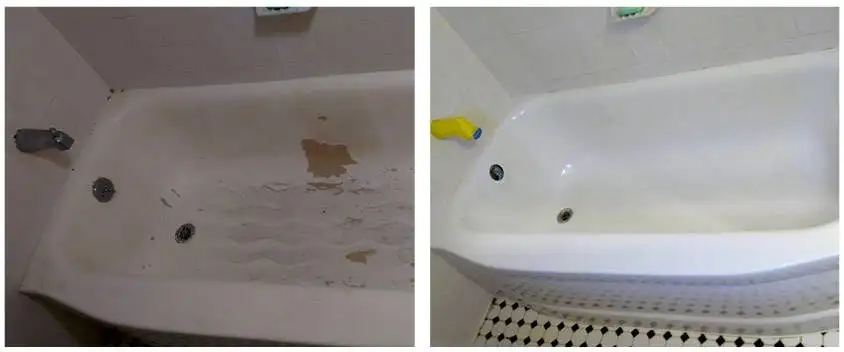
Cracked Bathtub? How to Repair It Without Replacing the Whole Tub
May 4, 2026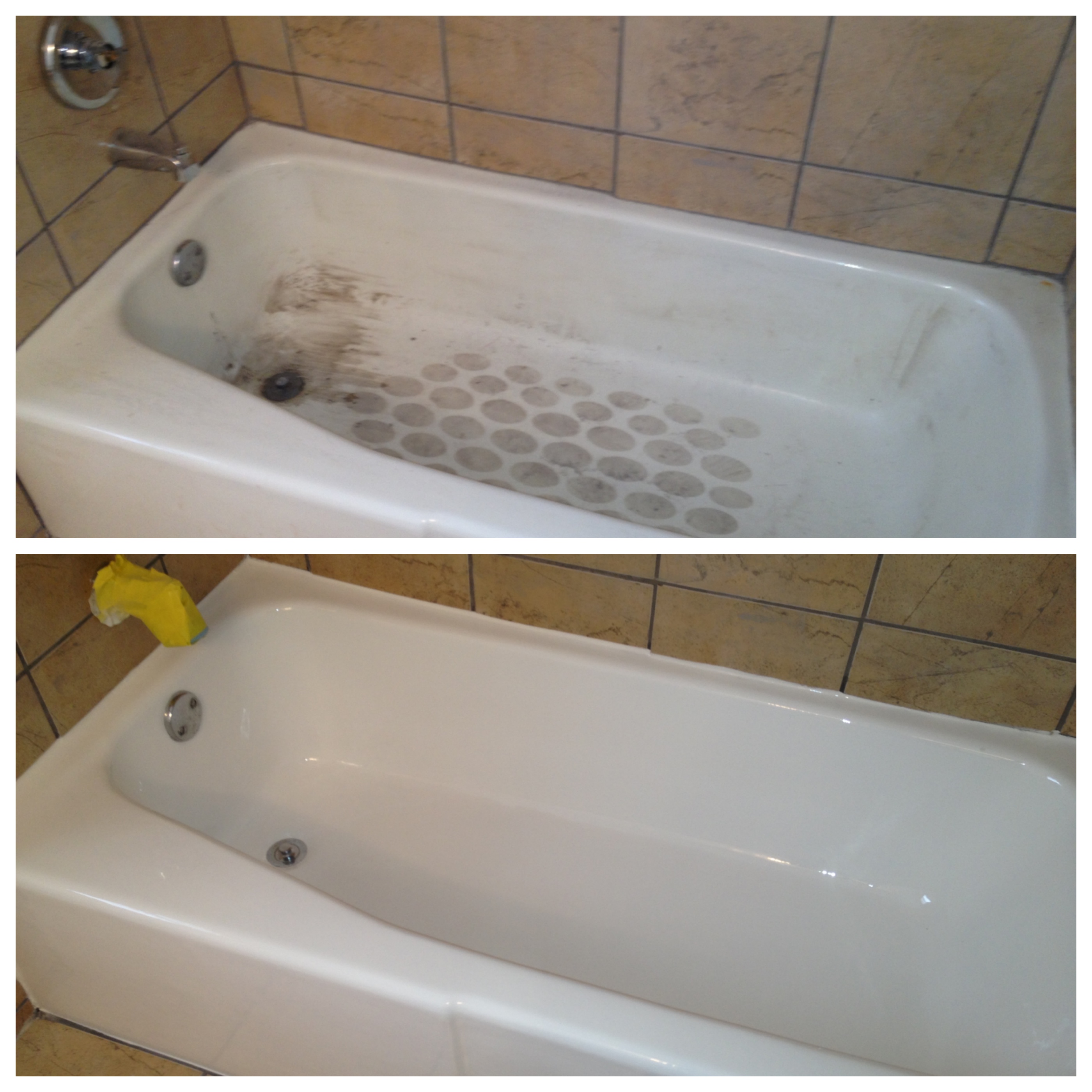
Bathtub Refinishing Pros and Cons: An Honest Breakdown for Chicago Homeowners
Your bathtub looks rough. Maybe it’s stained beyond what any cleaner can fix, or it’s that unmistakable 1970s avocado green that makes your whole bathroom feel dated. You’ve heard that refinishing can make it look new again for a fraction of replacement cost. But is that actually true, and what are the real tradeoffs?
Here’s a straightforward look at what bathtub refinishing actually delivers, where it falls short, and how to decide whether it makes sense for your specific situation. We’ve been refinishing bathtubs in the Chicago area since 1963, so we’ll give you the answer a contractor would give a friend—including when refinishing is the wrong call.
Quick Decision Matrix: Should You Refinish or Replace?
| Your Situation | Best Option | Why |
|---|---|---|
| Surface stains, chips, or discoloration | Refinish | Cosmetic issues are exactly what refinishing solves. Cost: $350–$650. |
| Dated color (harvest gold, pink, avocado) | Refinish | Any color can be refinished to white or custom colors for $25–$75 extra. |
| Minor surface cracks or hairline chips | Refinish | Small chips get filled and sealed during the prep process. |
| Deep structural cracks or soft spots | Replace | Refinishing coats the surface; it cannot repair structural failure underneath. |
| Significant rust-through or holes | Replace | Once rust penetrates the tub body, the substrate is compromised. |
| Plumbing problems or subfloor rot | Replace | You need the tub removed to access the plumbing and subfloor anyway. |
| Full bathroom remodel with layout change | Replace | If you’re moving plumbing or changing the tub footprint, refinishing doesn’t apply. |
| Budget under $700, tub structurally sound | Refinish | Replacement starts at $2,500 installed. Refinishing is the clear value play. |
What Are the Real Advantages of Refinishing a Bathtub?
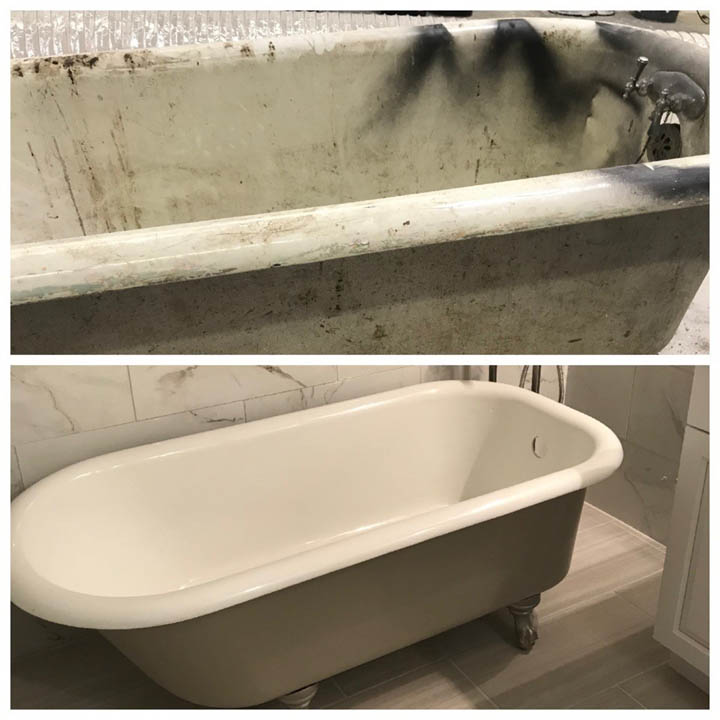
The core value proposition is simple: refinishing restores the look of your bathtub to like-new condition at roughly one-fifth the cost of ripping it out and installing a replacement. But the specific advantages go deeper than just price.
Cost Savings That Hold Up Under Scrutiny
In the Chicago metro area, a standard bathtub refinishing job runs $350 to $650. A full bathtub replacement—including demolition, disposal, new tub, plumbing reconnection, tile repair, and finishing—typically costs $2,500 to $5,500. That’s not a marginal difference; it’s a 70–80% savings. For a bathtub and tile combination, refinishing runs $520 to $1,200, still well below the $4,000–$8,000 range for a full surround replacement.
Here’s where the math gets more useful: on a cost-per-year basis, refinishing often wins even when you account for its shorter lifespan. A $500 refinishing job that lasts 12 years costs roughly $42 per year. A $4,000 replacement that lasts 25 years costs $160 per year. Even if you refinish twice over 25 years ($1,000 total), you’re still at $40 per year versus $160.
Speed and Minimal Disruption
A professional refinishing job takes 3 to 5 hours. Your tub is ready for light use within 24 to 48 hours. Compare that to a bathtub replacement, which typically requires 2 to 5 days of active work and leaves your bathroom unusable for the duration. For households with a single bathroom—common in Chicago bungalows, two-flats, and older condos—that timeline difference is significant.
No Demolition, No Permits, No Surprises
Replacement projects in Chicago require a building permit for plumbing work, and older homes frequently hide unwelcome surprises behind the walls: lead paint, outdated plumbing connections, water damage, or subfloor issues that add $500 to $2,000 in unplanned costs. Refinishing keeps the existing tub in place, so you skip all of that.
Environmental Impact
A cast iron bathtub weighs 300 to 500 pounds. A standard steel tub weighs 75 to 100 pounds. Either way, removing and disposing of a bathtub generates significant construction waste. Refinishing extends the life of what’s already there—a meaningful difference if reducing landfill contribution matters to you.
What Are the Honest Drawbacks?
No refinishing company should pretend the process has zero limitations. Here’s where it falls short, and these are real considerations worth weighing.
The Finish Has a Defined Lifespan
A professionally refinished bathtub lasts 10 to 15 years under normal residential use. High-quality professional coatings—like the proprietary products Aarco Baths uses—push closer to the 15-year mark and come with a 10-year guarantee. But this is not the same as a factory-original finish on a new tub, which can last 20 to 30 years. If your tub already has 40 years of life left structurally, refinishing is a great deal. If your tub is barely holding together, you’re coating a surface that may fail underneath.
You Need to Follow Maintenance Rules
A refinished surface requires more care than a factory finish. The rules aren’t complicated, but they’re non-negotiable:
| Do This | Avoid This | Why It Matters |
|---|---|---|
| Clean with non-abrasive liquid cleaners | Abrasive powders (Comet, Ajax, Bar Keepers Friend) | Abrasives scratch through the coating, exposing the old surface underneath |
| Wipe down after each use | Let standing water sit for hours | Prolonged water contact can soften the finish during the first 30 days of full cure |
| Use a bath mat without suction cups | Suction cup bath mats | Suction cups pull on the coating and can cause peeling at the edges |
| Rinse after using bath products | Leave soap scum, dyes, or bath oils sitting on the surface | Some chemicals in bath products can stain or degrade the finish over time |
These are manageable for most homeowners, but if your household is hard on fixtures—young kids, heavy daily use, frequent bath bomb sessions—a refinished surface will show wear faster than a factory tub.
Chemical Fumes During Application
Professional refinishing uses industrial coatings that produce strong fumes during application. A reputable company will ventilate the space with fans and ensure fumes are directed out of the home. You’ll want to keep windows open and stay out of the bathroom during the process and for several hours afterward. By the time the 24-to-48-hour cure window is up, fumes are gone. This is a temporary inconvenience, not a lasting health concern, but it’s worth knowing about upfront.
It Cannot Fix Everything
This is the most important limitation. Refinishing is a surface treatment. It coats the top of your existing tub with a new, durable finish. It does not repair:
- Structural cracks that flex when you step in the tub
- Rust that has eaten through the tub wall
- Soft spots in fiberglass where the substrate has weakened
- Plumbing leaks or drain issues
- Water damage or rot in the subfloor beneath the tub
If any of these apply to your tub, replacement is the right path. A refinisher who tells you otherwise is cutting corners.
What’s the Difference Between Professional and DIY Refinishing?
DIY bathtub refinishing kits cost $30 to $100 at hardware stores. Professional refinishing costs $350 to $650. That’s a big price gap, and the quality gap is equally large.
| Factor | DIY Kit ($30–$100) | Professional ($350–$650) |
|---|---|---|
| Coating type | Epoxy-based paint | Automotive-grade urethane or proprietary two-part resin |
| Typical lifespan | 1–3 years | 10–15 years |
| Application method | Brush or roller | HVLP spray gun (smooth, even coat) |
| Surface prep | Light sanding, chemical cleaner | Acid etch, bonding agent, chip repair, multiple prep stages |
| Finish quality | Visible brush marks, uneven texture | Smooth, high-gloss, factory-like finish |
| Warranty | None (product warranty only) | 5–10 year workmanship guarantee |
| Yellowing | Common within 6–12 months | Minimal with UV-stable professional coatings |
The core issue with DIY kits isn’t the application skill—it’s the chemistry. Epoxy-based paints in retail kits are fundamentally different products from the two-part urethane or polyester resin systems professionals use. The professional coatings create a harder, more chemically resistant surface that bonds to the substrate at a molecular level after proper acid-etch preparation. Retail epoxy sits on top of the existing surface and begins degrading almost immediately from water exposure, cleaning products, and UV light.
If you’re testing whether you like the look of a white tub before committing to a professional job, a DIY kit can serve that purpose. But if you’re expecting a result that lasts more than a year or two, the professional route is the only realistic option.
Our 12-Point Cost Analysis: Refinishing vs. Replacement in Chicago
We tracked actual project costs across Chicago-area jobs to build a realistic comparison. These numbers reflect 2025–2026 pricing for the greater Chicago metro, including suburbs like Addison, Naperville, and the surrounding area.
| Cost Category | Refinishing | Replacement |
|---|---|---|
| Base service / New tub | $350–$650 | $200–$2,000 |
| Demolition & removal | $0 | $300–$700 |
| Plumbing reconnection | $0 | $250–$600 |
| Tile repair / surround work | $0 | $500–$1,500 |
| Disposal fees | $0 | $50–$150 |
| Building permit (Chicago) | $0 | $75–$250 |
| Paint / finish touch-up | Included | $100–$300 |
| Unexpected repairs (common) | $0 | $200–$2,000 |
| Days bathroom is unusable | 1–2 days | 3–7 days |
| Custom color upcharge | $25–$75 | $0–$500 |
| Warranty | 10 years (Aarco Baths) | Varies by manufacturer |
| Typical Total | $375–$725 | $2,500–$7,500 |
The hidden cost driver in replacements is the unexpected repair line. In pre-1960s Chicago homes—bungalows, brick two-flats, greystones—pulling out a bathtub frequently reveals deteriorated plumbing, lead pipes, or water-damaged subfloor that must be addressed before a new tub can go in. That $200–$2,000 line item hits on roughly 40% of replacement jobs in older housing stock, based on contractor estimates across the Chicago market.
The 48-Hour Rule vs. the 30-Day Rule: What Most People Get Wrong About Cure Time
Most refinishing companies tell you the tub is ready in 24 to 48 hours. That’s true for surface hardness—you can stand in it and shower. But the full chemical cure takes approximately 30 days. During that 30-day window, the coating is still hardening at a molecular level.
What this means practically: for the first month after refinishing, be extra careful with the surface. Avoid dropping heavy bottles on it, don’t use abrasive cleaners, and don’t let standing water sit for extended periods. After the 30-day mark, the coating reaches its full hardness and chemical resistance. This distinction between “surface dry” and “fully cured” is something most homeowners never hear about, and it’s the most common reason people experience early finish problems—they treat the tub like it’s bulletproof on day three.
How Chicago’s Housing Stock Affects Your Decision
Chicago’s housing mix creates specific refinishing scenarios you won’t find in generic guides written for a national audience.
Pre-war bungalows and greystones (1900–1940s): These homes often have original cast iron tubs with claw feet or built-in alcove tubs. Cast iron is the ideal material for refinishing—it’s structurally indestructible and holds the coating beautifully. Many of these tubs are worth $1,500–$3,000 if purchased new as reproductions, so a $400–$600 refinishing job preserves real value.
Mid-century ranch homes and split-levels (1950s–1970s): Steel and early fiberglass tubs dominate this era. These are generally good candidates for refinishing, but inspect fiberglass tubs carefully for soft spots before committing.
Condo conversions (1980s–2000s): Builder-grade fiberglass tub/shower combos are common. These refinish well and the cost savings are significant versus replacing a one-piece surround unit, which often requires wall modification.
New construction and recent renovations (2010s+): Acrylic tubs are standard. These can be refinished, but if a newer acrylic tub already looks bad, investigate whether the issue is manufacturing defect (potentially warranty-covered) before paying for refinishing.
Frequently Asked Questions
How long does a refinished bathtub actually last?
With professional-grade coatings and proper maintenance, 10 to 15 years is the realistic range. Aarco Baths backs every refinishing job with a full 10-year guarantee. The main factors that shorten lifespan are abrasive cleaners, suction-cup bath mats, and heavy impact damage. If you follow basic care guidelines, expect to get the full life out of the finish.
Is bathtub refinishing safe for my family?
Once cured, absolutely. The finished surface is chemically inert and safe for daily use, including for children and pets. During the application process (3–5 hours), the chemicals produce fumes that require ventilation. A professional crew handles ventilation as part of the job. You’ll want to stay out of the bathroom during application and for several hours afterward. By the time you use the tub the next day, fumes have fully dissipated.
Can every type of bathtub be refinished?
Most common tub materials refinish well: porcelain over cast iron, porcelain over steel, fiberglass, and acrylic. The exceptions are tubs with significant structural damage (deep cracks, rust-through, soft spots) and tubs that have been refinished more than three times previously. Cultured marble and solid surface tubs can also be refinished, though they require different prep techniques.
What happens if the refinished surface gets damaged?
Small chips can usually be spot-repaired without refinishing the entire tub. If damage is more extensive—large peeling areas or multiple chips—a full re-coat may be needed. This is another advantage of working with an established local company: warranty coverage and the ability to do spot repairs quickly. Check what your refinisher’s warranty covers before committing.
How soon after refinishing can I use the bathtub?
The surface is ready for light use (showering, bathing) after 24 to 48 hours. Full chemical cure takes approximately 30 days. During that first month, avoid dropping heavy objects on the surface, skip abrasive cleaners, and don’t let water stand in the tub for extended periods. After 30 days, the finish reaches its maximum hardness and you can treat it like any normal bathtub surface.
The Bottom Line
Bathtub refinishing is a strong value for Chicago homeowners with structurally sound tubs that have cosmetic issues—stains, chips, dated colors, or general wear. It saves 70–80% over replacement, takes a day instead of a week, and avoids the permit and demolition headaches that come with pulling out an old tub in older Chicago housing stock.
It’s the wrong choice if your tub has structural problems, active water damage, or if a full bathroom gut is already planned. Knowing which situation you’re in is the real decision—the rest is just details.
If you’re in the Chicago area and want a professional assessment of whether your tub is a good candidate for refinishing, reach out to Aarco Baths for a straightforward evaluation. We’ve been doing this since 1963 across Chicago, Addison, and Naperville, and we’ll tell you honestly whether refinishing makes sense for your specific tub.