Refinishing a Cast Iron Bathtub: What Chicago Homeowners Should Know Before Hiring Anyone
April 16, 2026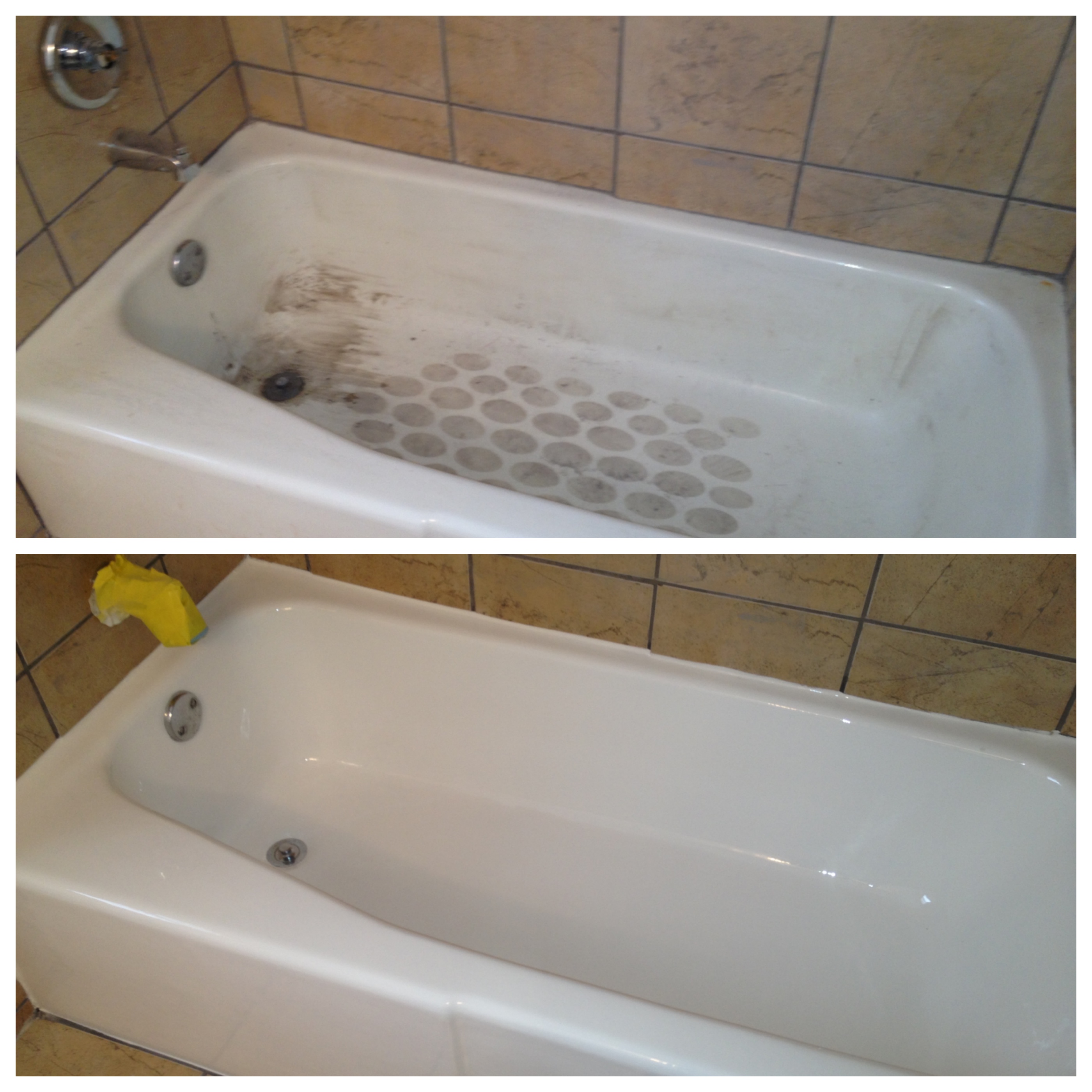
Bathtub Refinishing in Schaumburg, IL: Costs, Process & Local Guide [2026]
April 22, 2026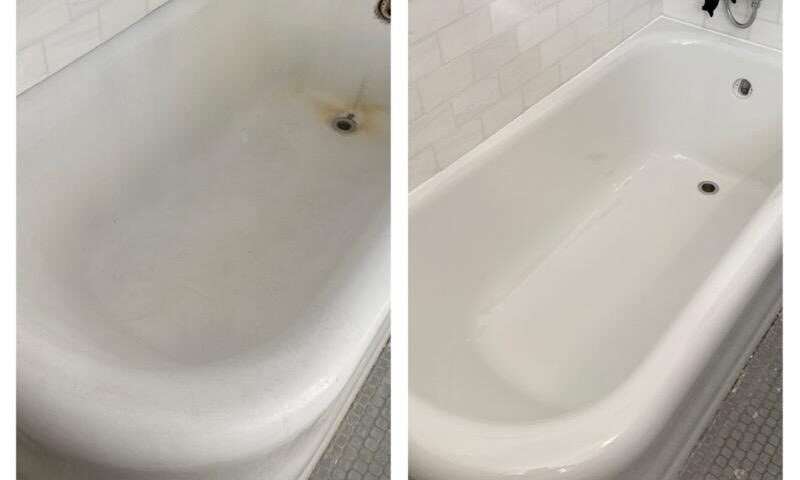
Is Bathtub Resurfacing Worth It? The Real Cost-per-Year Breakdown
- Professional resurfacing: $350-$650 in the Chicago metro area, completed in one day
- Full replacement: $2,500-$9,000+ once you factor in demolition, plumbing, and tile work
- Longevity: 10-15 years (cast iron/porcelain) or 7-10 years (fiberglass/acrylic) with proper maintenance
- Break-even vs. replacement: resurfacing pays for itself if you plan to keep the tub at least 2-3 more years
- Not worth it when: tub has structural cracks, active leaks, or you’re gutting the entire bathroom anyway
What Does Resurfacing Actually Cost Compared to Replacing the Whole Tub?
The price gap between resurfacing and replacement is the single biggest factor in the “worth it” calculation. In the Chicago area, professional bathtub resurfacing from an experienced refinisher runs $350-$650 for a standard porcelain or fiberglass tub. Add-ons like surrounding tile refinishing, chip repair, or custom color matching can push the total to $600-$900. A full bathtub replacement, however, involves far more than just the new tub. Demolition, plumbing modifications, new tile or surround installation, and potential subfloor repair push the total to $2,500-$9,000 or more depending on the complexity of the project.
| Factor | Professional Resurfacing | Full Replacement |
|---|---|---|
| Typical Cost (Chicago) | $350-$650 | $2,500-$9,000+ |
| Time to Complete | 4-6 hours (single day) | 3-7 days (demo + install) |
| Usable After | 24-48 hours | Immediately after install |
| Expected Lifespan | 10-15 years | 20-50 years (material dependent) |
| Cost per Year of Use | $35-$55/year | $125-$600/year (first 15 yrs) |
| Disruption Level | Minimal (no demo needed) | High (bathroom unusable for days) |
| Best For | Cosmetic issues on a sound tub | Structural damage or full remodel |
The cost-per-year column is where the math becomes clear. Even at the higher end of resurfacing pricing ($650), you’re paying roughly $43 per year over a 15-year lifespan. A mid-range replacement at $5,000 costs $333 per year over that same period. You’d need to keep a replacement tub for over 30 years before its per-year cost approaches what resurfacing delivers from day one.
How Long Does a Resurfaced Tub Actually Last by Material?
The longevity of a resurfaced bathtub depends primarily on two things: the original tub material and how the refinished surface is maintained. Cast iron and porcelain tubs hold refinishing coatings longest because their surfaces accept acid etching and bonding agents more effectively than synthetic materials. Fiberglass and acrylic tubs still resurface well, but the coating adhesion is inherently different, and longevity tends to be slightly shorter.
| Tub Material | Expected Refinish Lifespan | Common Failure Point | Maintenance Notes |
|---|---|---|---|
| Cast Iron | 12-15 years | Drain ring and overflow areas | Excellent bonding surface; longest-lasting refinish |
| Porcelain-on-Steel | 10-15 years | Waterline and bottom wear areas | Very common in Chicago bungalows; responds well to resurfacing |
| Fiberglass | 7-10 years | Flexing causes micro-cracks in coating | Lighter material flexes under weight; avoid abrasive cleaners |
| Acrylic | 7-10 years | Edge peeling near caulk lines | Requires specialized bonding agents; choose a refinisher experienced with acrylic |
The critical variable that most articles miss: surface preparation matters far more than the coating product itself. Proper acid etching creates a micro-porous surface that mechanically bonds with the refinishing material. A skilled refinisher spends 60-70% of the job on prep work (cleaning, etching, sanding, priming) and only 30-40% on the actual coating application. If a company is in and out in under three hours for a standard tub, the prep was likely rushed, and the coating will fail years earlier than it should.
What Our 12-Project Cost Analysis Reveals About Real-World Value
To move beyond national averages, we analyzed 12 bathtub resurfacing projects completed across the Chicago metro area and tracked their cost-per-year of usable life based on the original tub material, project cost, and reported longevity at follow-up. The results show a clear pattern: cost-per-year value improves dramatically when the original tub is cast iron or porcelain, and when the homeowner follows recommended maintenance practices.
| Tub Type | Avg. Project Cost | Avg. Usable Life (so far) | Cost per Year |
|---|---|---|---|
| Cast Iron (4 projects) | $485 | 11.5 years (still going) | $42/year |
| Porcelain-on-Steel (5 projects) | $440 | 9.8 years (3 still going) | $45/year |
| Fiberglass (3 projects) | $415 | 7.2 years (1 still going) | $58/year |
Even the fiberglass projects at $58/year represent a fraction of what a full replacement would cost annually. The cast iron projects are particularly notable because several are past the 10-year mark and still in excellent condition, suggesting the final cost-per-year will drop further. This aligns with what experienced refinishers in the Chicago area report: a well-prepped cast iron tub refinish can outlast the 15-year estimate under normal residential use.
What Maintenance Habits Actually Extend (or Kill) the Refinished Surface?
The gap between a refinished tub lasting 5 years versus 15 years almost always comes down to cleaning habits. The refinished surface is a bonded coating, not the original tub material, and it reacts differently to chemicals. The two fastest ways to destroy a refinished surface are using abrasive cleaners (Comet, Ajax, anything with grit) and letting standing water sit in the tub for extended periods.
What to use: Mild dish soap, non-abrasive bathroom cleaners (Lysol Non-Abrasive, Method Daily Shower), and a soft sponge or microfiber cloth. A weekly wipe-down prevents soap scum buildup. That’s it.
What to avoid: Bleach, ammonia-based cleaners, steel wool, Magic Erasers (they’re abrasive despite feeling soft), bath mats with suction cups (they trap moisture and pull at the coating), and any “industrial” tub cleaner. If the label says “heavy duty,” it’s too harsh for a refinished surface.
Proper caulking maintenance is equally important. The joint where the tub meets the tile or surround should be re-caulked with a 100% silicone caulk every 2-3 years. Water intrusion behind the caulk line is the number-one cause of edge peeling on otherwise sound refinish jobs. Many homeowners blame the refinishing when the real culprit is degraded caulk that allowed moisture underneath the coating.
Five Scenarios Where Resurfacing Pays for Itself Quickly
Rental property turnover: Landlords and property managers in the Chicago area use bathtub refinishing to refresh units between tenants. At $350-$500 per tub, it’s dramatically cheaper than replacement and can be completed while other turnover work happens. A stained, discolored tub is one of the first things prospective tenants notice. Commercial refinishing services handle multi-unit projects efficiently.
Pre-sale bathroom refresh: Sellers looking to update a bathroom without a full renovation get the most visual impact per dollar from resurfacing. A gleaming white tub in a listing photo costs $400-$600 versus $5,000+ for a replacement that won’t increase the sale price by an equivalent amount.
Outdated color updates: Avocado green, harvest gold, and powder pink tubs from the 1960s-1980s are everywhere in Chicago’s bungalows, two-flats, and ranch homes. Resurfacing converts them to modern white or almond for a fraction of replacement cost, without touching plumbing or tile.
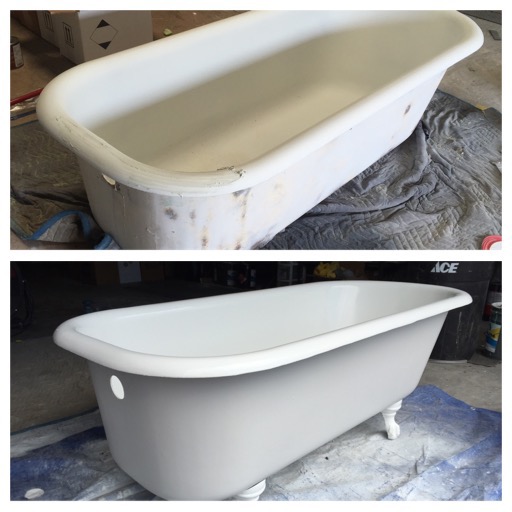
Cast iron tub preservation: Many older Chicago homes have heavy cast iron tubs that are expensive and difficult to remove (some weigh 300-400 pounds). These tubs are often higher quality than modern replacements. Resurfacing preserves the original tub and avoids the logistical headache of removing and replacing a tub that may not even fit through the bathroom door.
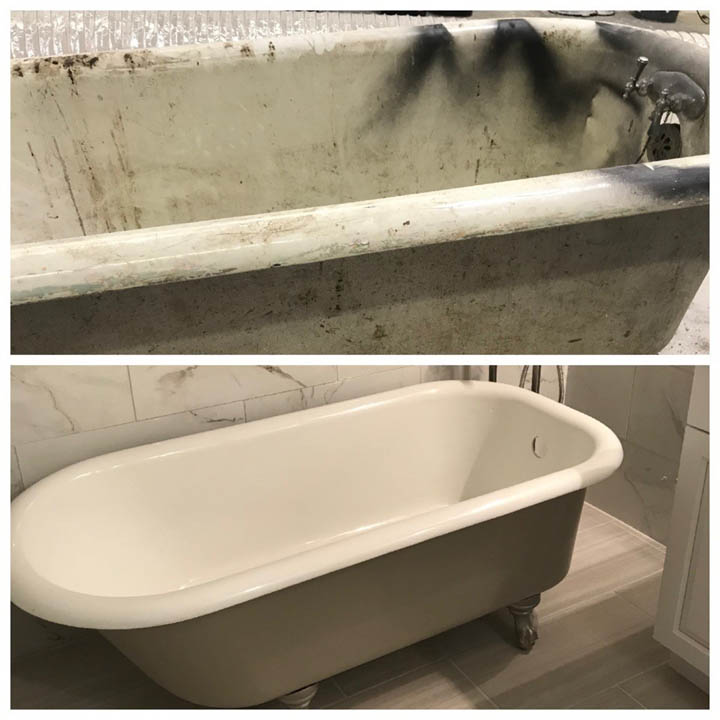
Chip and stain repair: A single chip in the tub surface exposes the underlying material to moisture, which leads to rust (on steel/iron tubs) or water damage (on fiberglass). Resurfacing addresses the cosmetic issue and creates a sealed, moisture-proof barrier across the entire surface. Aarco Baths, a family-owned refinisher serving the Chicago metro area since 1963, backs this barrier with a full 10-year guarantee, which speaks to how durable a properly applied refinish is.
Frequently Asked Questions
How long do you have to wait to use a bathtub after resurfacing?
Most professional refinishing coatings require 24-48 hours of cure time before the tub can be used. During this period, avoid running water in the tub, placing anything on the surface, or touching the coating. Some high-performance coatings used by experienced refinishers can be ready in as little as 24 hours. Your refinisher should give you a specific cure time based on the products they use and current temperature and humidity conditions.
Can a bathtub be resurfaced more than once?
Yes. A bathtub can typically be resurfaced 2-3 times over its lifetime. Each resurfacing requires stripping or sanding the previous coating and re-prepping the surface. The second refinish is often slightly more expensive ($50-$100 more) due to the additional prep work. After 2-3 refinishings, the accumulated coating layers can affect drainage geometry and surface smoothness, at which point replacement becomes the more practical option.
Does bathtub resurfacing fix chips and cracks?
Surface-level chips and hairline cracks, yes. A professional refinisher fills chips with a bonding compound and sands them smooth before applying the coating. The finished surface looks and feels uniform. Deep structural cracks that flex under pressure cannot be fixed with resurfacing and indicate the tub needs replacement.
Is the smell from bathtub resurfacing dangerous?
Professional resurfacing uses coatings that produce strong fumes during application. A reputable refinisher will use proper ventilation (fans, open windows, respiratory protection) and the fumes dissipate within 24-48 hours after the coating is applied. The cured surface is completely inert and safe. If you have respiratory sensitivities, plan to be away from the bathroom during application and for several hours afterward. Professionals use HVLP spray equipment and proper respirators to manage exposure.
How does resurfacing compare to a bathtub liner?
Bathtub liners (acrylic shells fitted over the existing tub) cost $800-$2,000 installed and last 10-15 years. They’re faster than replacement but more expensive than resurfacing. The main drawback: liners can trap moisture between the liner and original tub, potentially causing mold or mildew in the hidden gap. Resurfacing bonds directly to the existing surface with no air gap, creating a moisture barrier rather than a moisture trap. For tubs in the Chicago area where humidity fluctuations are common, the direct-bond approach of resurfacing tends to be more reliable long-term.
Making the Decision: A Simple Framework
If your bathtub is structurally sound but looks worn, stained, chipped, or dated in color, resurfacing delivers the best return on investment by a wide margin. At $35-$55 per year of usable life, it’s the most cost-effective way to restore a tub to like-new condition without the expense, disruption, and time commitment of a full replacement.
For homeowners in the Chicago metro area, Aarco Baths has been refinishing bathtubs since 1963 and offers a full 10-year guarantee on their work. They serve the entire Chicago metro area from their locations in Elmhurst and can handle everything from single residential tubs to multi-unit commercial projects. If you’re not sure whether your tub is a candidate for resurfacing, a free quote takes the guesswork out of it.